
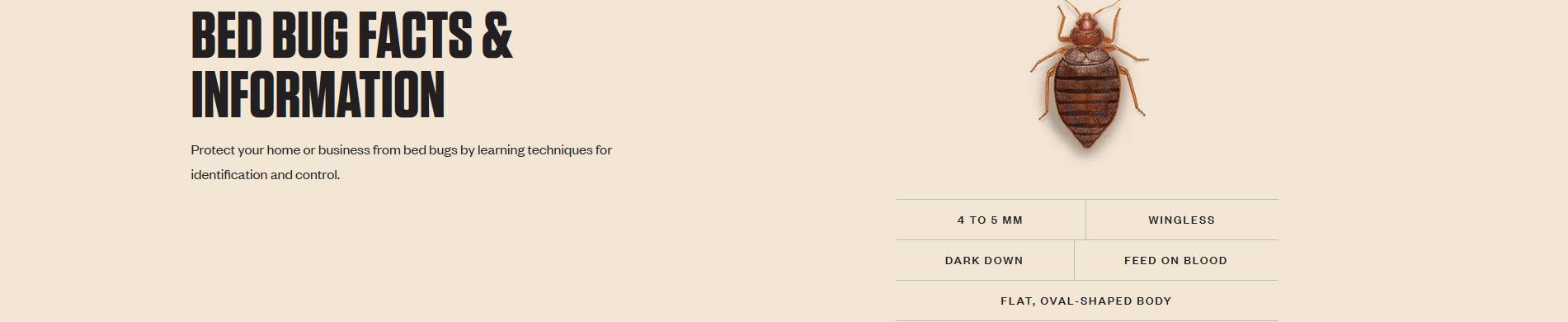
Bed bugs
Two pairs of wings normally present; mouth parts piercing and sucking, forming a beak, or rostrum, normally held under the body. Metamorphosis usually incomplete, with egg and nymphal stages. Flat oval insects, with a very short, functionless forewings, hindwings absent, rostrum lies in a ventral groove; tarsi 3-segmented; exclusively bloodsucking. Adults, 5mm long; reddish-brown in colour, becoming purple after feeding; simple eyes; ratio of head width (including eyes) to length of third antennal segment usually greater than 1.7.
The principal host is man, though other warm blooded animals can be parasite. As bed bugs cannot fly, they must either crawl or be passively transported in clothing, or more probably in luggage, furniture, books and other objects used as harbourages. Their ability to withstand many months without feeding increases their chances of surviving such as transportation and the insects very wide distribution throughout their world demonstrates their success.
Bed bugs are often associated with poor, crowded and unhygienic conditions. Most bed bug infestations are to be found in domestic premises, usually in the bedrooms. Bed bugs , hide away in cracks and crevices for most of the time and coming out at night, usually just before dawn, to feed on the blood of their sleeping hosts.